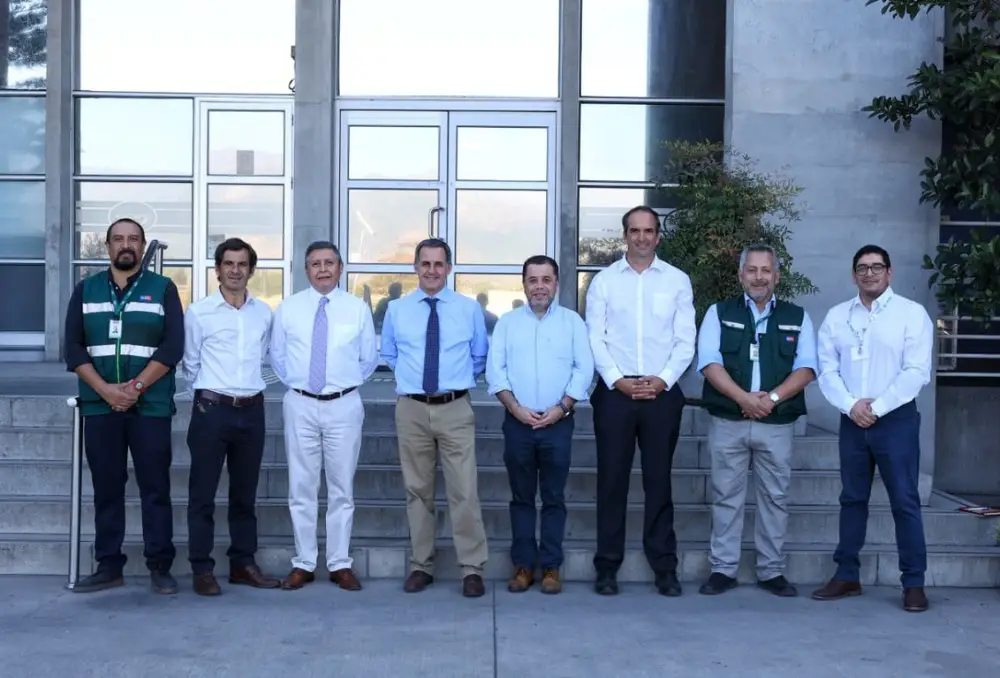





Joined by representatives from the Agricultural and Livestock Service (SAG) and ChileCarne, the public official visited two plants in the O’Higgins Region that are vital to the country’s production, strengthening public-private collaboration in agriculture.
In support of public-private collaboration in the agricultural and livestock sector, the new Undersecretary of Agriculture, Francesco Venezian, along with SAG’s acting National Director, Óscar Camacho, and ChileCarne’s President, Juan Carlos Domínguez, met with Agrosuper executives—an association member—and visited the company’s plants in Punta de Cortés and Rosario.
The visit on March 18 marked the Undersecretary’s first site visit since taking office, primarily focusing on production processes and emphasizing biosecurity measures and protocols at the facilities designed to prevent disease entry and protect health.
During the visit, Undersecretary Venezian emphasized SAG’s role in overseeing the industry. “We visited poultry processing plants, where SAG monitors slaughtering processes to ensure compliance with regulations, protect animal welfare, and maintain product quality. This enables us to guarantee destination markets that we comply with their standards,” he stated.
He highlighted the importance of coordination between the public and private sectors in opening and maintaining access to international markets, noting that the country’s health status, certified by SAG, is the result of ongoing work in the field and is a key factor in Chile’s ability to maintain access to multiple destinations.
The President of ChileCarne, Juan Carlos Domínguez, praised the visit and highlighted the importance of learning about industry standards on the ground. “We were able to see the measures implemented to prevent diseases from spreading to animal production, as well as the safety processes that guarantee markets and consumers a high-quality product,” he noted.
Domínguez highlighted the visit to the Rosario plant, the largest in Chile, where approximately 9,500 pigs are slaughtered daily and about 2,000 people are employed, supplying both the national market and more than sixty international destinations.
The visit reflects the coordinated work between authorities, public agencies, and the industry to maintain Chile’s high health standards, strengthening the confidence of international markets, and consolidating the country’s position as a reliable supplier of quality food.