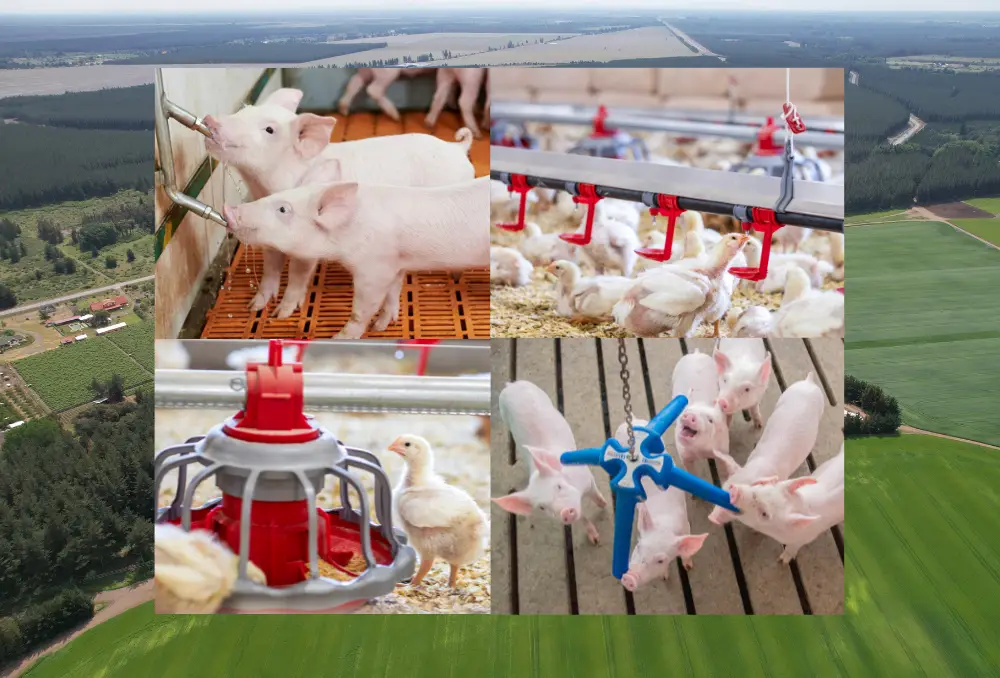



On the occasion of World Water Day and amid rising water scarcity, Chile’s poultry and pork industries demonstrate ongoing efficiency gains, with notable decreases in water use and increasingly circular approach. This has made water management stronger and better prepared for future challenges.
March 22nd marks World Water Day, a global effort to raise awareness about responsible water use. Water management has become a vital component in transitioning toward more sustainable production systems.
Over the last few decades, Chile has steadily improved water use efficiency in poultry and pork production, reducing consumption and optimizing management across the entire production chain. This progress is due to better, more sustainable practices and the adoption of new technologies.
In the pork industry, one major milestone is the reduction in freshwater use at farms, as noted in ChileCarne’s report “25 Years of Sustainability Developments in the Chilean Swine Sector.” Since the early 2000s, freshwater consumption has dropped by 69%, from roughly 5.2 cubic meters per animal to 1.5 cubic meters today. This shows a significant reduction in water used for production.
The modernization of systems to process slurry—the mix of solid manure produced in pig farming and the water used to wash the pens—largely explains this progress; new technologies treat and recirculate water, returning it to farms to be used primarily for cleaning and maintenance. Accordingly, water recirculation has also improved significantly, rising from 2.6 liters per kilogram of pork in 2015 to 3.6 liters in 2023.
Daniela Álvarez, Sustainability Manager of ChileCarne, emphasizes that “efficient water use is one of the most important environmental advances in the sector. We have managed to significantly reduce freshwater consumption while moving toward a more circular model, where the resource is treated, reused, and integrated into other processes.”
More efficient production and water circularity
Improvements in water efficiency are closely tied to gains in productivity. Process optimization, along with improved production metrics, has allowed more animal protein to be produced using fewer resources.
Poultry and pork production uses about eighteen million cubic meters of water annually, mainly for animal hydration, facility cleaning, and industrial processes. Around two million are used by poultry farms, ten million by pig farms, and six million by processing plants.
However, thanks to the implementation of treatment and recirculation systems, only about 38% of that volume represents actual consumption, amounting to 6.9 million cubic meters. The rest is recovered and reintroduced into the system.
In other words, 62% of water is treated and reused: some is recirculated for internal processes, such as facility cleaning, while the largest portion is used for fertigation—agricultural irrigation with treated water to provide nutrients—or returned to the environment in compliance with current environmental regulations.
Water-efficient operations: improvements in processes and infrastructure
At the operational level, water efficiency is more effectively managed through digital monitoring systems, which provide data on water consumption and enable timely, data-driven decision-making.
Chile Carne member company Agrícola AASA has made concrete adjustments to processes and engineering to optimize resources and plant performance, explains Alejandro Gebauer, the company’s Management and Projects Manager.
This has been complemented by investments in piping systems, such as pipelines and encapsulated gutters, in order to reduce water losses, as well as by optimizing washing lines with more efficient equipment and updated cleaning protocols.
“We eliminated water loss points caused by outdated systems and adopted more efficient solutions. Additionally, training in washing protocols has been crucial to achieving significant reductions in usage,” explains José López from Agrícola AASA.
The company has also improved its sanitation infrastructure by adding internal and external sewage systems, diversion wells, and pumps, thereby enhancing water operations and management.
This work is part of a sustained effort to make production more sustainable, with active worker involvement, and to integrate water efficiency into the plant’s daily operations.
Rather than isolated measures, it is an integrated water management system in which technology, operations, and organizational culture come together for more efficient and responsible use.
A regulatory framework that drives improvements
This progress has come hand in hand with the strengthening of environmental regulations in Chile. Since the Environmental Framework Law took effect in 1994, the country has built a regulatory system to prevent pollution and promote more efficient water use. This system is supported by specific rules for effluent (wastewater) treatment, emissions control, and waste management, as well as environmental assessment methods for production projects.
This framework, along with the work carried out by the sector and the Agency for Sustainability and Climate Change through clean production agreements, and the Chile Conscious Origin standard from the Ministry of Agriculture, which promotes a sustainable agri-food industry, has encouraged the adoption of cleaner technologies and supported continuous improvements in water management in poultry and pork production.
Challenges linked to water scarcity
Although progress has been made, water availability still poses a major challenge. Chile remains highly vulnerable to droughts, making it essential to keep improving water management across all production sectors.
The use of new technologies, increased recirculation, and more efficient resource management will be essential for ongoing progress in sustainability.
Daniela Álvarez states that “the main challenge is to continue building on these advances in the face of greater water scarcity, incorporating new technologies, and strengthening efficient management to be able to produce food while safeguarding the environment and our natural resources.”
Year after year, the poultry and pork industries are challenged to keep food production competitive, minimize environmental impact, and adapt to an increasingly demanding climate, all while upholding high production standards.
Water management is now both an environmental requirement and a strategic element for the sector’s future growth, where efficiency, innovation, and continuous improvement will shape the path forward.