




Representatives from ChileCarne’s Sustainability Department made a technical visit to Brazil to learn about the pork sector’s approaches to innovation, automation, sustainability, and the circular economy. The visit was part of the “Characterization of Food Loss in Chile” project, led by the ArticuLAC community of practice, and offered an opportunity to exchange knowledge and identify best practices to advance more efficient and sustainable production.
From October 11 to 18, Daniela Álvarez (Sustainability Manager) and María Ignacia Essedin (Sustainability Analyst) from ChileCarne visited Brazil to learn from international experiences, share technical knowledge, and identify opportunities for innovation. This technical tour was part of the “Characterization of Food Loss in Chile” project, carried out through ArticuLAC. It offered insights into solutions developed by Brazilian pork sector stakeholders in technology, production efficiency, and resource use.
ArticuLAC is a Latin American community of practice that facilitates the exchange of knowledge and experiences to address challenges related to food systems. In this context, the trip focused on initiatives that could support Chilean efforts to characterize food loss and identify opportunities for improvement throughout the production chain.
The experience also allowed a broader examination of the sustainability and innovation progress each country has made. Technical exchange and collaboration among industry stakeholders are essential for finding solutions and adapting best practices to different production contexts.
Automation and innovation in the pig industry
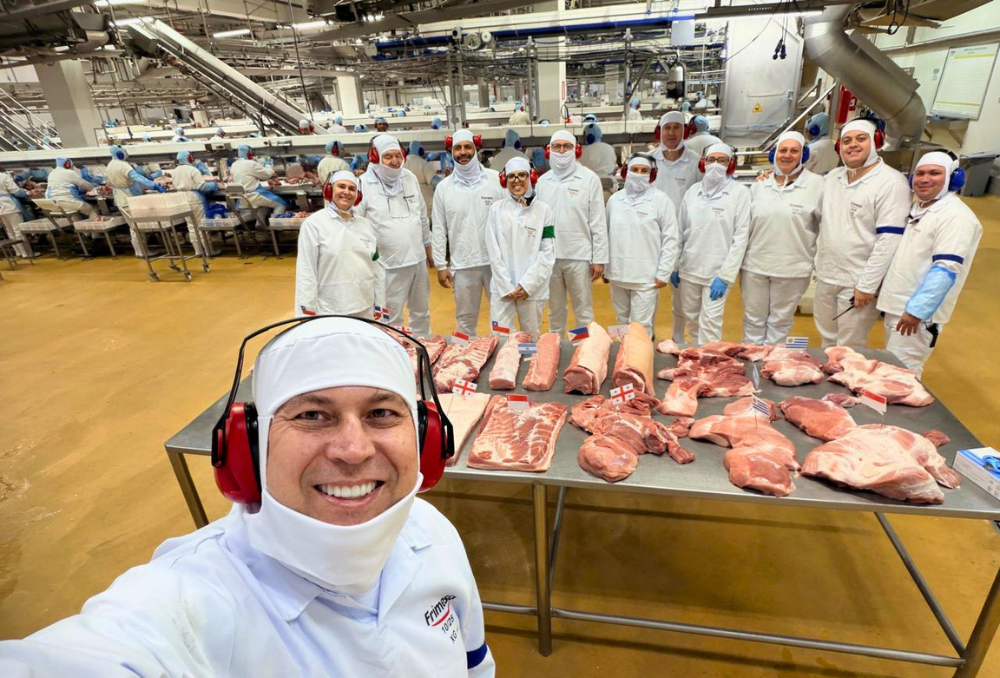
One of the tour’s highlights was visiting FRIMESA. While touring the company’s facilities, the delegation learned about the processes at one of Latin America’s most modern slaughterhouses, renowned for its high level of automation. The tour offered a firsthand look at how technology is integrated across industrial operations, providing insight into how these solutions optimize production.
Vittor Frosi, the industrial superintendent at FRIMESA, led the tour, showing the ChileCarne representatives around the facility and explaining the plant’s main features and operating systems.
For Daniela Álvarez, this experience was extremely valuable because it gave her the opportunity to observe the realities of large-scale production and compare them with the latest developments in Chile.
“These visits allow us to learn from experiences that could be very useful for Chile. Seeing how other countries make better use of their resources, transform waste into new value streams, and incorporate advances in robotics and production processes gives us concrete ideas for continuing to improve sustainability and efficiency and for strengthening our sector’s competitiveness,” she noted.
The tour highlighted how technology has modernized the sector and underscored the importance of sharing experiences among countries that face common challenges in productivity, efficient use of resources, and sustainability.
Circular economy: New opportunities for waste recovery
The tour continued with a visit to Primato, a group of pig farmers developing a pilot plant with MWM to test various business models for its members.
The possibilities under consideration include producing organo-mineral fertilizers and generating small-scale biogas and biomethane. These plans aim to utilize available resources in production systems and explore new ways to transform waste into valuable products.
The pilot project gave the delegation insight into the potential of such solutions and the technical and economic challenges that must be overcome to make them viable. This experience offered a comprehensive view of the opportunities that arise from linking pig farming with renewable energy generation and recycling byproducts.
This topic is particularly relevant to Chile. In recent years, the domestic pig industry has made progress in adopting technologies to treat and recover slurry and transform it into fertilizers, soil amendments for agricultural use, and energy sources. According to data published by ChileCarne, the rate of slurry treatment increased from less than 40% in the late 1990s to over 95% today. This increase is due to the growing adoption of advanced systems, such as biodigesters, activated sludge plants, composting, and vermifilters.
These advances demonstrate how technological innovation and the circular economy can contribute to more efficient resource use and reduce the environmental impact of production. Meanwhile, efforts to characterize food losses underscore the importance of identifying additional opportunities for process improvement and strengthening the knowledge base to inform future actions.
María Ignacia Essedin spoke highly of the technical exchange that took place during the tour. “It was a very productive and enriching visit that allowed us to learn about other experiences, share technical knowledge, and broaden our perspective on the challenges and opportunities that exist in the areas of sustainability and innovation,” she said.
The visit to Primato complemented the lessons learned at FRIMESA, highlighting two aspects of productive transformation: the incorporation of technology to optimize operations and the development of alternatives to make better use of available resources.
The technical tour provided ChileCarne with insight into the Brazilian pork sector and new information to support its work in Chile. This exchange reinforced the importance of sustainable production and continued exploration of opportunities for innovation, efficiency, and resource use throughout the production chain.