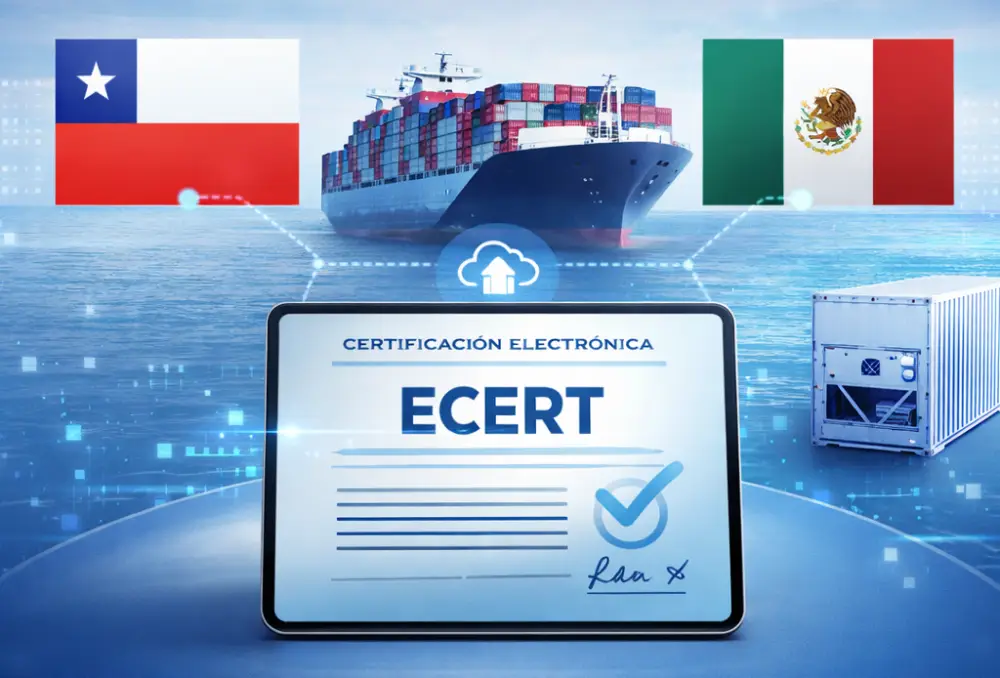



The official implementation of the Animal Health E-certification (ECERT) marks a step forward for Chilean livestock exports: it does away with the need for security paper, simplifies health procedures, and drives competitiveness in a key market.
After more than ten years of joint work between the health authorities of both countries—Chile’s Agricultural and Livestock Service (SAG) and Mexico’s National Service of Agrifood Health, Safety, and Quality (SENASICA)—the electronic livestock certification (ECERT) for beef, lamb, pork, poultry, and by-products exported from Chile to Mexico officially went into effect on March 2nd.
The e-certification consolidates a process focused on the bilateral health agenda, resulting in a significant improvement for the export sector by modernizing procedures and simplifying trade.
Competitive outlook for a strategic market
Mexico is a key destination for Chile’s meat industry. It ranks second for poultry exports, and the implementation of the digital system marks a significant step forward for trade facilitation and competition. With this new system, in addition to those already in place for the United States and China, more than 77% of poultry exports will be covered by electronic certification.
“This is a significant milestone for our industry. Paperless certification not only modernizes sanitary management but also enhances process efficiency and fosters trust in trade. It results from ongoing technical collaboration between public officials and the private sector, reaffirming Chile’s position as a reliable supplier of high-quality meat and by-products,” said Rodrigo Castañón, Business Manager of ChileCarne.
What is involved in paperless certification?
E-certification eliminates the need for security paper and substitutes traditional physical media with equally valid digital documents, enhancing sanitary traceability and simplifying management.
In practice, the certification is handled through SAG’s electronic export certificates system (ECZE), the official platform for issuing and validating these certificates. With this system, documents are no longer printed on security paper and the digital version holds full official validity, thus simplifying management and lowering both the time and costs involved.
The launch of the system went smoothly, demonstrating effective coordination between both health authorities and an orderly transition to the digital scheme. The decision was enacted through SAG Circular No. 147/2026, which establishes this new standard for bilateral trade.
This development builds on the public-private efforts of recent years to strengthen health cooperation, enhance traceability, and modernize foreign trade processes. For the export sector, it provides a concrete tool that streamlines document management, reduces administrative time and costs, and boosts operational efficiency, thereby positioning Chile as a reliable and competitive supplier of meat and by-products in strategic markets.