





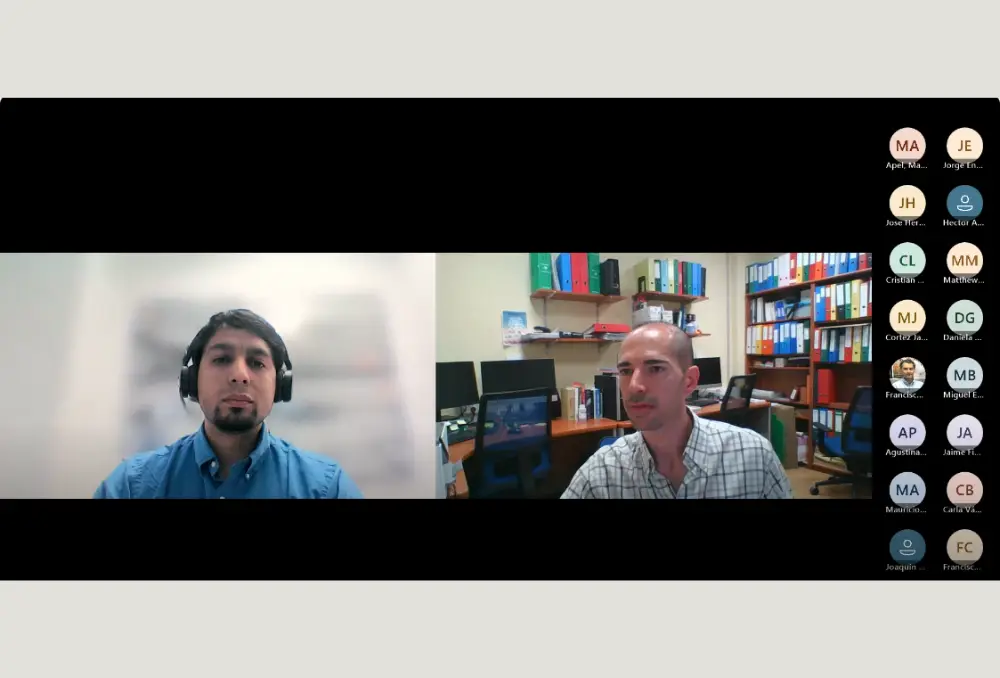
The online talk covered Spain’s recent experience with African swine fever (ASF) and highlighted key lessons on biosecurity, surveillance, and public-private collaboration in disease-free countries.
The Chilean Meat Exporters Association held its first ChileCarne Talk of 2026 on one of the main health hazards in global pork production, drawing over 50 participants. The talk, held on March 18, focused on Spain’s experience with ASF and its implications for disease-free countries, as part of the series of technical discussions promoted by ChileCarne with support from Virbac.
The series aims to provide new insights into the key health challenges facing the swine and poultry production and export industry, including biosecurity, food safety, sustainability, and animal welfare. These initiatives promote ongoing professional development, dialogue, and knowledge sharing among meat industry practitioners in an increasingly challenging international health landscape.
The webinar, titled “Spain and ASF: Management, challenges, and lessons for Chile,” was presented by Dr. José Ángel Barasona, a researcher at the Veterinary Health Surveillance Center (VISAVET) of the Universidad Complutense de Madrid, who is internationally renowned for its research on African swine fever virus. In his talk, he addressed the main challenges Spain has faced and the lessons learned, which can help strengthen prevention and biosecurity in countries free of ASF.
The evolution of the outbreak in Spain continues to be closely monitored by health authorities and the international pork industry. Since its detection in November 2025, 232 ASF cases and a total of 40 outbreaks have been recorded as of March 20, 2026, figures that keep both veterinary services and the production sector on alert.