


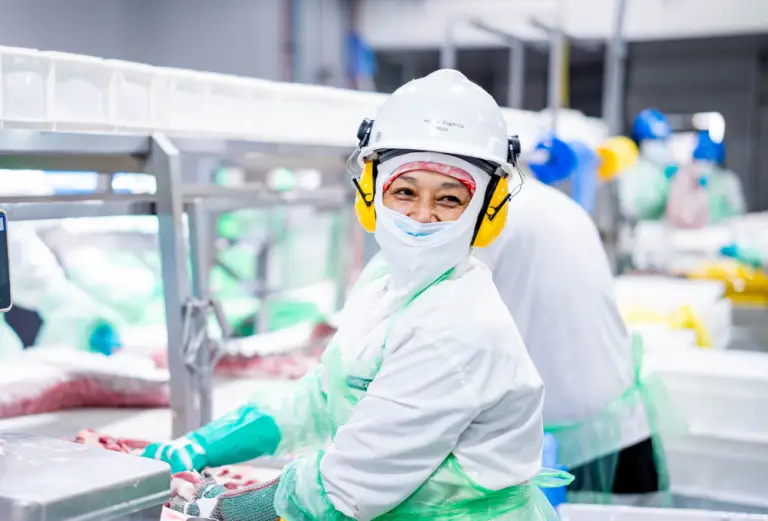
Backed by strong monitoring, surveillance, and traceability systems, food safety is essential to public health, consumer confidence, market access, and international trade, thereby fueling the competitive growth of the pork and poultry sectors and strengthening Chile’s position as a reliable global food supplier.
June 7 is World Food Safety Day, an initiative launched by the United Nations to promote measures aimed at preventing, detecting, and managing food-related risks. The day aims to highlight that food safety is a shared responsibility among governments, producers, researchers, and consumers, and is an essential component of public health, sustainable development, and international trade.
Over the decades, Chile has developed a robust sanitary and food safety system that is internationally recognized for its high standards and responsiveness. This has allowed the country to cement its position as a leading exporter of safe, high-quality food to markets with the most stringent food safety standards, such as the United States, Europe, Canada, China, Japan, South Korea, Mexico, and more.
ChileCarne sees the progress made in this area as the result of a long-term vision focused on prevention, risk management, and continuous improvement—elements that have become a selling point of the Chilean pork and poultry sector. “Food safety is not just a sanitary requirement. It is the foundation on which we build consumer trust, credibility in our production systems, and Chile’s ability to compete in the world’s most demanding markets,” says Juan Carlos Domínguez, president of ChileCarne.
A key factor in competitiveness
In a sector that is heavily export-oriented, meat safety is a prerequisite for gaining and maintaining access to international markets. That said, its importance goes beyond regulatory compliance and has become a distinguishing feature that is increasingly valued by consumers, authorities, and trading partners.
Markets are demanding increasingly detailed information about where products come from, how they are produced, and the systems that ensure their safety. Traceability, continuous monitoring, and the ability to verify each stage of the production process have become key factors to strengthen competitiveness.
The Chilean pork and poultry sectors are particularly strong in this area. Companies exercise full control over the production chain—from genetics and animal feed to rearing, processing, and marketing—ensuring high standards of quality and safety at every stage.
“Trust isn’t something you declare; it’s something you demonstrate. It is built every day through inspection systems, traceability, ongoing monitoring, and a culture of continuous improvement that engages the entire production chain,” notes Juan Carlos Domínguez.
Systems that support food security
The industry’s commitment to food safety involves ongoing efforts focused on prevention, monitoring, and continuous improvement.
The food safety systems implemented by companies in the sector rely on internationally recognized prevention methods, including Hazard Analysis and Critical Control Points (HACCP), prerequisite programs, continuous monitoring, and verification systems that make it possible to identify, control, and prevent risks throughout the entire production chain.
One of the most notable initiatives is the Comprehensive Surveillance Program for Dioxins, Furans, and PCBs, which has been in place since 2008. Through routine sampling, analyses at accredited laboratories, audits, and training activities, this program monitors and controls these contaminants from raw materials through to the final product, ensuring compliance with domestic and international regulations. In addition, there are programs for the control and self-monitoring of chemical residues, which verify compliance with maximum permitted limits for veterinary drugs, pesticides, and environmental contaminants, as well as the absence of prohibited substances on farms; microbiological safety programs, which monitor bacterial indicators and the absence of pathogens throughout the production chain; and the Comprehensive Better Health Program, which promotes the responsible use of drugs to prevent antimicrobial resistance.
These efforts are complemented by periodic audits conducted by both national authorities and agencies in the destination markets, which are a fundamental means of third-party validation of the food safety, traceability, and certification systems required for international trade. These audits not only verify compliance with health and regulatory requirements, but also strengthen the international credibility and reputation of Chilean livestock production, thereby helping to maintain and expand export markets.
Furthermore, the process of opening new markets involves rigorous health inspections and technical audits to verify, on-site, the production, control, and monitoring conditions in Chile’s pork and poultry sectors, thereby providing objective assurances to the competent authorities of importing countries.
Science and collaboration to tackle new challenges
Chile’s progress in food safety is the outcome of a strategy based on scientific evidence, risk management, and close collaboration between the public sector, academia, and the private sector.
In this context, ChileCarne supports the National Food Safety and Quality Policy 2026–2036, which promotes a preventive and coordinated approach to strengthen the national food system and deal with emerging challenges related to food production, consumption, and trade.
Maintaining and improving oversight, monitoring, and traceability systems will continue to be vital for protecting public health, meeting growing market demands, and strengthening Chile’s position as a safe, reliable, and competitive global food supplier.