




Ten years after its implementation, the private initiative promoted by ChileCarne has established itself as a key preventive strategy for safeguarding the country’s animal health, supporting family poultry farming, and boosting health security in ecologically sensitive areas.
February 2 marks World Wetlands Day, a date that acknowledges the environmental value of these ecosystems and their importance to public health. Since 2015, ChileCarne has implemented the Wetlands Biosecurity Program, a privately funded initiative that celebrated its tenth anniversary last year. In 2025 alone, it benefited 174 small poultry farmers through health support, feed, and infrastructure.
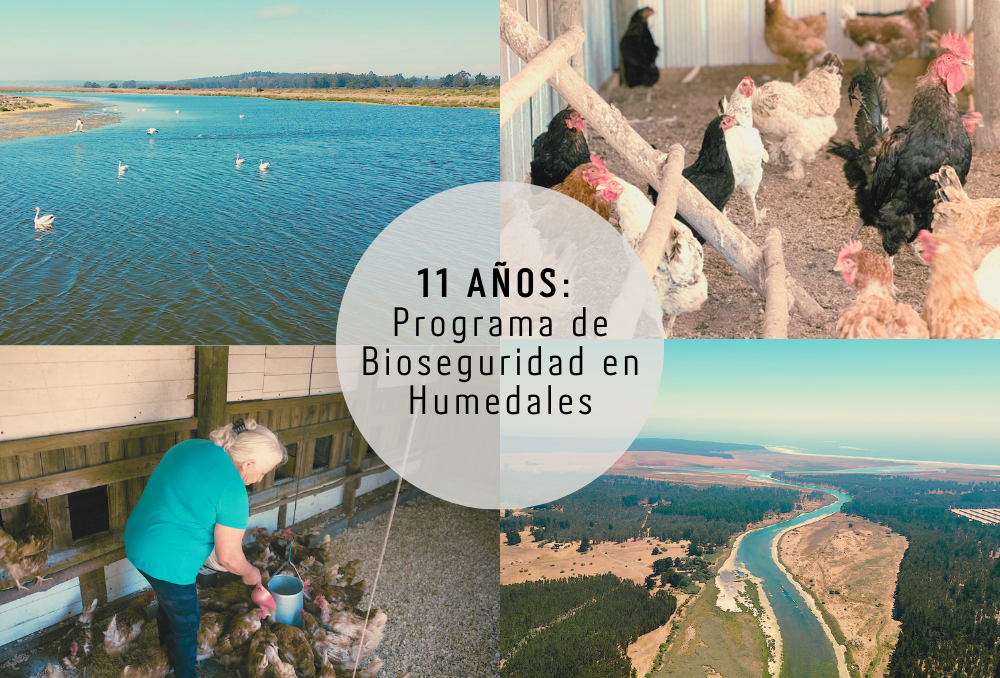
Over the past ten years, the program has become a strategic preventive tool for the health of poultry in Chile, supporting small-scale farmers in areas where domestic birds interact with wild resident and migratory species. Biosecurity is particularly important in these types of areas, as it reduces exposure to diseases that can have a major impact on production and trade.
The objective is to ensure ongoing prevention against the introduction and spread of exotic and endemic diseases, providing direct support to backyard poultry farmers located near wetlands. This helps to protect Chile’s animal health status and prevent the outbreak of diseases such as avian influenza or Newcastle disease, which can lead to sanitary restrictions, market closures, and economic losses for the entire supply chain.
Health prevention in strategic territories
The program focuses on minimizing high-risk contact between domestic and wild birds, particularly in areas frequented by migratory birds that can be vectors of disease.
In 2025, the initiative invested more than $173 million pesos to deliver 134,000 kilos of feed, equivalent to 5,184 sacks; hold five training sessions for 200 people (including small-scale poultry farmers and INDAP technicians) in Curacaví, Isla de Maipo, Talagante, Lampa, and Rancagua; and repair seven henhouses in areas such as La Ligua, Punta Teatinos, and El Yali.
These actions were carried out in seven strategic wetlands across the country—Lluta, Punta Teatinos, La Ligua, Concón, Batuco, Río Maipo, and El Yali—areas with a high concentration of migratory birds and where strengthening biosecurity is particularly important to prevent the spread of disease.
According to Carolina Larraín, head of Poultry Health at ChileCarne, “wetlands are particularly sensitive because they are where migratory birds from the northern hemisphere mix with resident birds. During their journey, they may approach farms or backyards in search of food, increasing the risk of transmission of diseases such as avian influenza or Newcastle disease. That is why it is essential to maintain preventive measures on an ongoing basis.”
The program addresses this challenge by combining infrastructure improvements with health management: building and repairing henhouses, supplying feed on a monthly basis, providing veterinary checkups and vaccinations, and teaching participants about early disease detection and good biosecurity practices.
These efforts are coordinated with the Agricultural Development Institute (INDAP), the Agricultural and Livestock Service (SAG), Prodemu, and teams from Prodesal, all of which play a key role in identifying beneficiaries and providing technical coordination in the field. This public-private partnership has helped strengthen capacities in communities and consolidate a culture of prevention that stands the test of time.
Biosecurity that bolsters production and sustainability
Beyond protecting health, the program has directly impacted the productive stability of participating families. Keeping birds protected, ensuring they are fed, and providing ongoing technical support has reduced losses and sustained more consistent and orderly production.
“We have seen that farmers have been able to streamline and make their small-scale production more profitable. These days, they have healthier birds, fewer losses, and better infrastructure. This leads to cleaner, more stable, and higher-quality production, which helps them plan their finances with more certainty,” says Carolina Larraín.
After ten years of implementation, the program has evolved into a permanent strategy that proves prevention is the most effective tool for protecting the country’s animal health and making poultry production more sustainable.
Looking ahead, the challenge is to expand its territorial coverage and continue to bring in small-scale farmers. “We want to continue boosting biosecurity in family poultry farming, reach new wetlands visited by migratory birds, and push for better health practices. Preventing the spread of disease is key to protecting both small farmers and the national industry and keeping Chile free of exotic diseases,” she adds.
Funding for this initiative is entirely private, with contributions from ChileCarne (40%), ChileHuevos (35%), and other entities (25%), reflective of the sector’s commitment to prevention as the basis for safe, resilient poultry farming that respects the environment.
Thanks to a decade of steady work, the Wetlands Biosecurity Program has become a model of public-private collaboration that integrates health, sustainability, and territorial development, strengthening both family poultry farming and the national industry.